Language
 English
English
English
Caviar can be confusing because the word is used in two ways. Strictly speaking, true caviar is salted roe from sturgeon. In everyday shopping language, many people also use "red caviar" for salmon and trout roe. This guide explains both: classic black sturgeon caviar and popular red roe varieties, with practical notes on taste, price, origin, storage and how to choose the right tin or jar.
The best-known black caviar types are Beluga, Osietra, Sevruga, Sterlet, Kaluga/Amur Royal and Siberian sturgeon. They differ by fish species, egg size, colour, texture and flavour. Red caviar usually refers to roe from salmon species such as Keta, Pink salmon, Sockeye, Coho and Chinook, plus trout roe. If you want the softest, largest grains, look at Beluga; if you want a nutty classic with a firmer pop, Osietra is a strong choice; if you want a more affordable everyday option, Keta, Pink salmon or Trout roe are easier entry points.
| Type | Fish / source | Egg size and look | Typical taste | Lemberg price / product note |
| Beluga | Huso huso sturgeon / aquaculture | Large 3-4 mm pearls, anthracite to steel grey | Soft, creamy, nutty, delicate | From £1,500 to £3,000 per kg depending on pack; 50g preservative-free glass jar at £150 |
| Osietra | Acipenser gueldenstaedtii / aquaculture | 1.5-2.5 mm, grey-brown to golden tones, elastic shell | Rich, nutty, aromatic, firmer than Beluga | 50g available at £37.50 (£750/kg); promo packs from £450/kg |
| Siberian sturgeon | Acipenser baerii / aquaculture | About 1.5-2 mm, dark grey to black | Bright aroma, delicate texture, lightly salted | 50g available at £40 (£800/kg); lightly salted at 35g salt per kg |
| Kaluga | Huso dauricus sturgeon / aquaculture | Large 3.5-4 mm pearls, dark green to grey, silver or brown | Soft, melting, similar to Beluga | 50g available at £70 (£1,400/kg); 100g at £120 (£1,200/kg) |
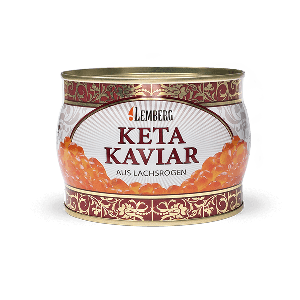
| Keta / Chum salmon | Oncorhynchus keta / wild catch North Pacific, FAO 67 | Large red-orange grains | Delicate, succulent, richer red roe | 500g available at £62.50 (£125/kg); promo packs from £100/kg |
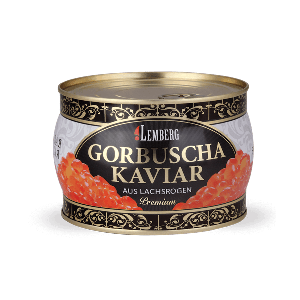
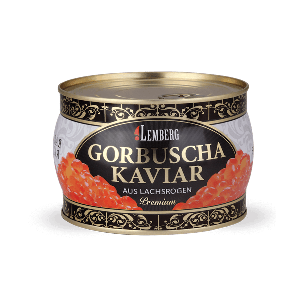
| Pink salmon | Oncorhynchus gorbuscha / wild catch North Pacific, FAO 67 | Orange grains, tender texture | Slight ocean aroma, melts in the mouth | 500g Premium available at £47.50 (£95/kg); multi-pack promo from £47.50/kg |
| Trout roe | Oncorhynchus mykiss / aquaculture, Denmark | Small, bright orange, firm grain | Mild, less salty, buttery finish | 250g listed at £22.50 (£90/kg); 400g promo shown at £68.75/kg |
Beluga is a prestigious choice for the largest, softest grains. Beluga pearls are 3-4 mm, anthracite to steel grey, creamy and nutty. It comes from the Huso huso sturgeon, which is slow to mature: Beluga females usually first spawn at around 15-20 years. That long maturation is one reason Beluga remains rare and expensive.
Choose Beluga when the caviar itself is the centre of the moment: a celebration, gift, or simple tasting served chilled with a mother-of-pearl spoon. Avoid overpowering toppings; the point is the texture and clean flavour.
Osietra, also written Oscietra or Osetra, is a classic sturgeon caviar from Acipenser gueldenstaedtii. It is usually smaller than Beluga but has a more elastic pop and a deep nutty taste. Osietra eggs are about 1.5-2.5 mm, with colours from blue-grey to grey-brown and sometimes a golden hue.
Siberian sturgeon caviar comes from Acipenser baerii. It has medium grains of about 1.5-2 mm, a dark grey to black colour, a bright aroma and a delicate texture. It is lightly salted at 35 grams of salt per kilogram.
For shoppers, Siberian sturgeon is useful because it keeps the black-caviar experience while usually sitting below Beluga in price. It is a strong option for tastings, canapes and first-time black caviar buyers who want a clear sturgeon flavour.
Kaluga caviar comes from Huso dauricus, a freshwater sturgeon raised in aquaculture. Its pearls are large and shiny, around 3.5-4 mm, with colour that can range from dark green and dark grey to silver or brown. The taste is soft and melting, close to Beluga, which makes Kaluga a strong choice for a celebration or gift when you want large-grain black caviar.
Sevruga and Sterlet are important classic names in caviar, but availability can change with supplier range, farming and import rules. Where they are not currently available, they are best treated as educational references rather than shopping recommendations.
Hybrid and aquaculture caviars now matter for both quality and affordability. Amur Royal, a Kaluga-Amur hybrid, is a good modern example: it can offer large grains comparable to Beluga, but with its own flavour profile. This is worth adding because it reflects how modern caviar buying has moved beyond the old Beluga-Osietra-Sevruga shortlist.
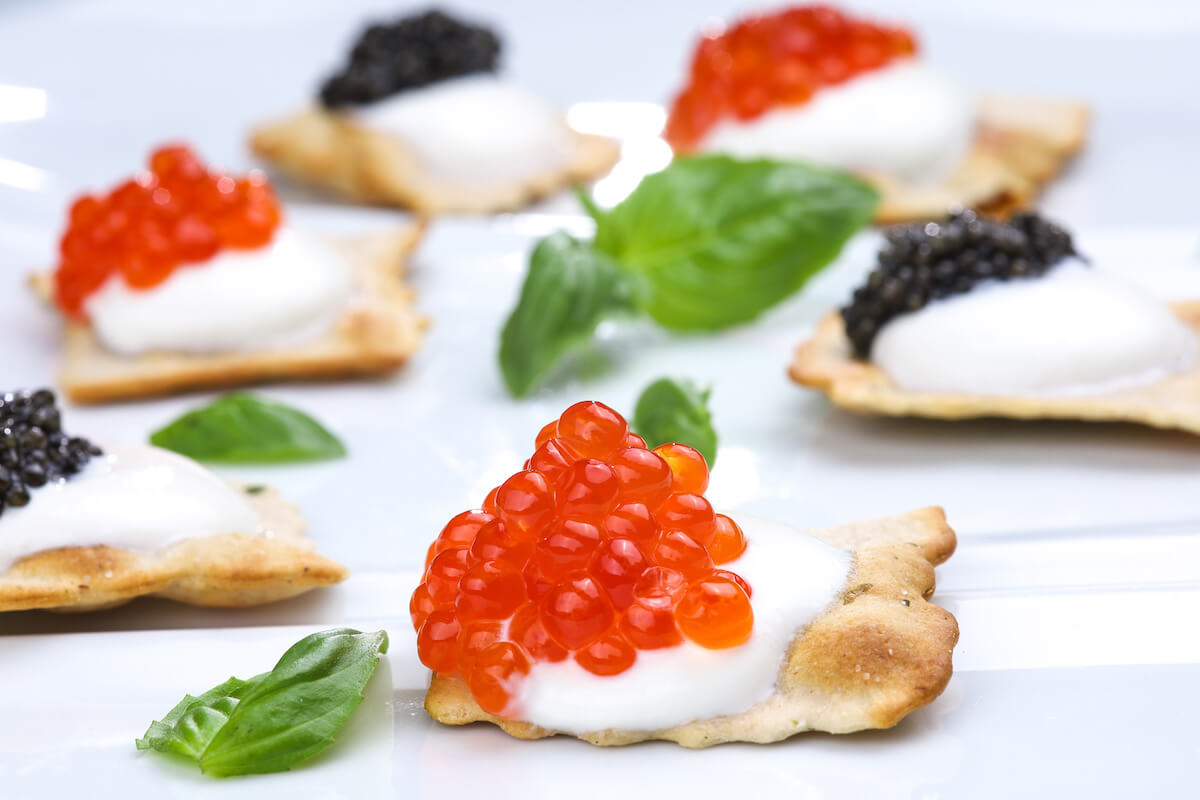
Red caviar is usually salmon roe. It is brighter, larger in flavour, often saltier, and far more affordable than most sturgeon caviar. It is also easier to use in everyday meals: blini, toast, eggs, sushi, salads, canapes and festive starters.
Keta, or chum salmon, is prized for large red-orange grains and a delicate, succulent texture. Keta roe comes from wild-caught North Pacific salmon, FAO area 67, and is naturally rich in Omega-3 polyunsaturated fats. It is often more expensive than Pink salmon roe because it is harvested in smaller quantities and has larger grains.
Pink salmon roe is one of the most popular and affordable red caviar types. Pink salmon roe comes from wild-caught North Pacific Pink salmon (Oncorhynchus gorbuscha), FAO area 67, with salt and sorbic acid as ingredients. It has a slight ocean aroma and a tender texture that melts in the mouth.
Trout roe is smaller and usually milder than many salmon roes. Trout roe comes from Salmon Trout (Oncorhynchus mykiss) raised in aquaculture in Denmark. Its mild, less salty taste and buttery finish work especially well with canapes, egg dishes and lighter starters.
| Need | Best fit | Why |
| Luxury tasting or gift | Beluga, Kaluga/Amur Royal | Sturgeon caviar has finer texture, more complex flavour and higher perceived value |
| First black-caviar experience | Siberian sturgeon or Osietra | Recognisable sturgeon flavour without jumping straight to the highest Beluga price |
| Party canapes or festive table | Keta or Pink salmon caviar | Bright colour, generous grain size and better price for larger servings |
| Everyday topping | Trout roe or Pink salmon roe | Affordable, easy to portion and versatile with eggs, toast, potatoes and salads |
Processing affects the flavour, shelf life and texture of caviar. Malossol means "little salt" and is used for lightly salted caviar where the natural taste of the roe remains central. More heavily salted caviar can taste stronger and last longer. Pressed caviar is made from broken or very soft eggs and has a dense, spreadable texture. Pasteurised caviar is heat-treated and can be more stable, but many connoisseurs prefer the texture of fresh, non-pasteurised caviar.
The practical rule is simple: keep each product at the temperature shown on its label. Salmon roe is commonly stored at 0 to +6 C and should be used soon after opening; sturgeon caviar is commonly stored at 0 to +4 C and used within 2-3 days after opening.
For a small tasting, choose smaller tins first. If you are still choosing your preferred type, start with smaller quantities and compare styles before moving to larger tins. For canapes or a party table, red caviar gives more generous portions at a lower price per kilogram, while black caviar is best served in smaller amounts where the flavour can stand out.
What is the best type of caviar?
There is no single best type. Beluga is prized for large soft grains, Osietra for nutty depth, Siberian sturgeon for a clear sturgeon taste at a more accessible price, and salmon or trout roe for everyday use and larger servings.
Is salmon roe real caviar?
Strictly, true caviar comes from sturgeon. In retail language, salmon roe is often called red caviar. The article should explain both terms so readers understand what they are buying.
What is the difference between Beluga and Osietra?
Beluga usually has larger, softer grains and a creamy nutty taste. Osietra is smaller, firmer and often more intensely nutty, with grey-brown to golden colour.
Which caviar is best for beginners?
Beginners can start with smaller quantities. For black caviar, Siberian sturgeon or Osietra are practical starting points; for red caviar, Pink salmon, Keta or Trout roe are more affordable and easy to use.
How long does caviar last after opening?
Follow the product label. Sturgeon caviar is commonly kept at 0 to +4 C and used within 2-3 days after opening; salmon roe should be refrigerated and used soon after opening.
The strongest caviar guide should help the reader choose, not only define. Beluga, Kaluga, Osietra and Siberian sturgeon belong to the classic black caviar world; Keta, Pink salmon and Trout roe make red caviar more affordable and flexible. Use taste, grain size, origin, price, storage and the occasion as the decision points, and choose a traceable supplier that clearly states fish species, source and handling instructions.
Publication date: 18 July 2026
Our bestsellers
More Recipes & Tips
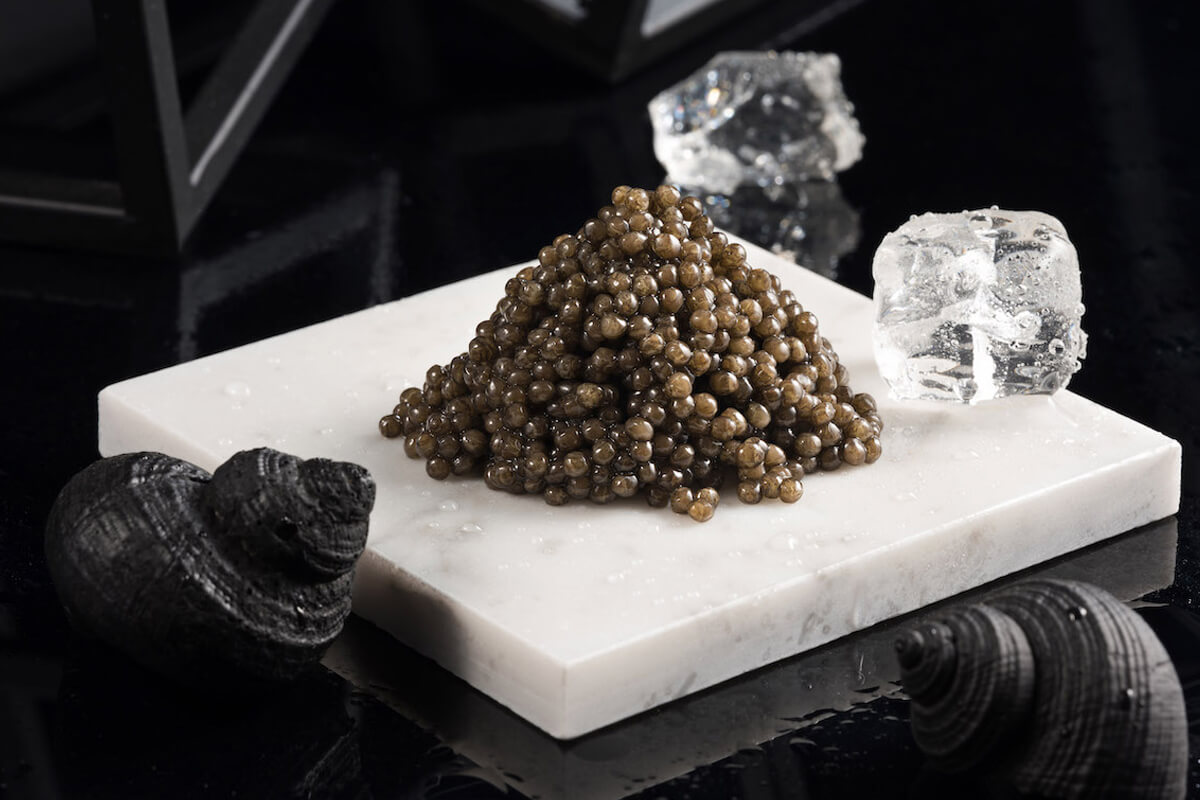
Caviar is one of the most delicious and healthy foods rich in protein and iodine. The high cost is due to the complexity of the production technology and the exquisite taste of the finished product. What is black caviar?
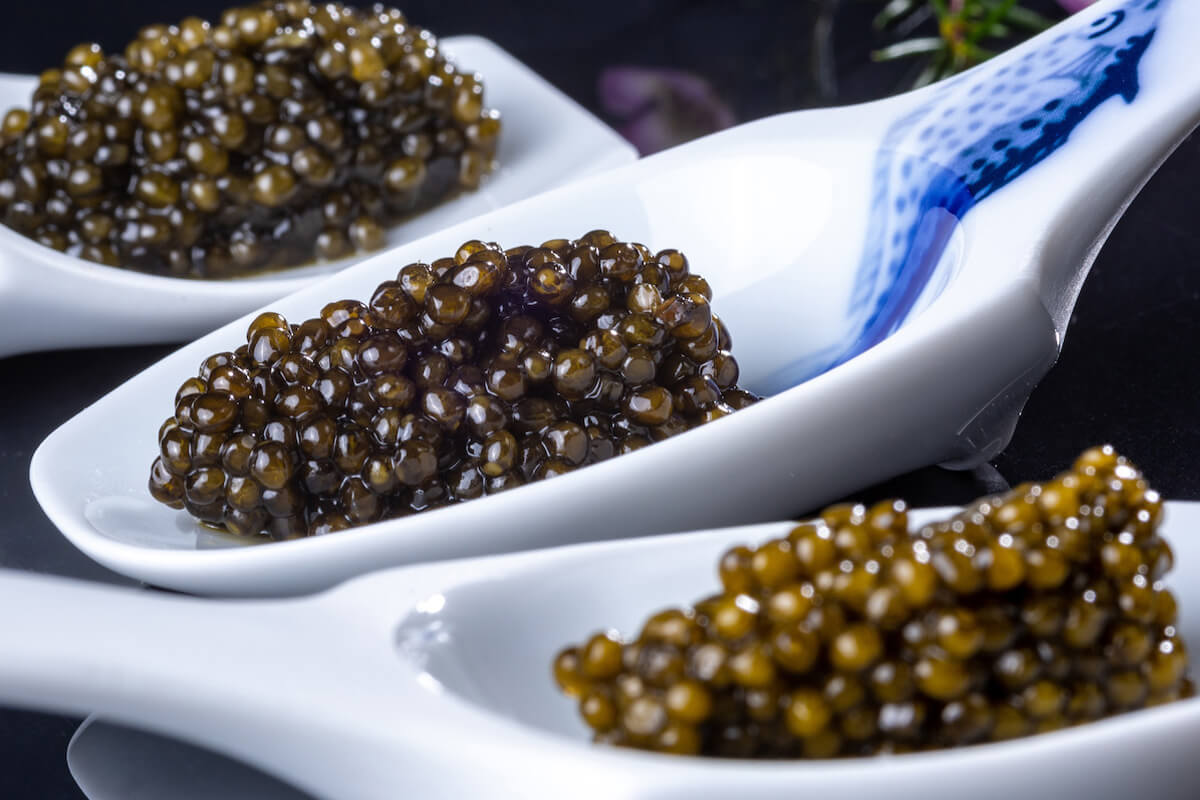
While the original Persian word khavyar simply means "egg," not every egg can be described as caviar. Some producers tend to apply this prestigious label to any type of roe from capelin to salmon and everything in between.
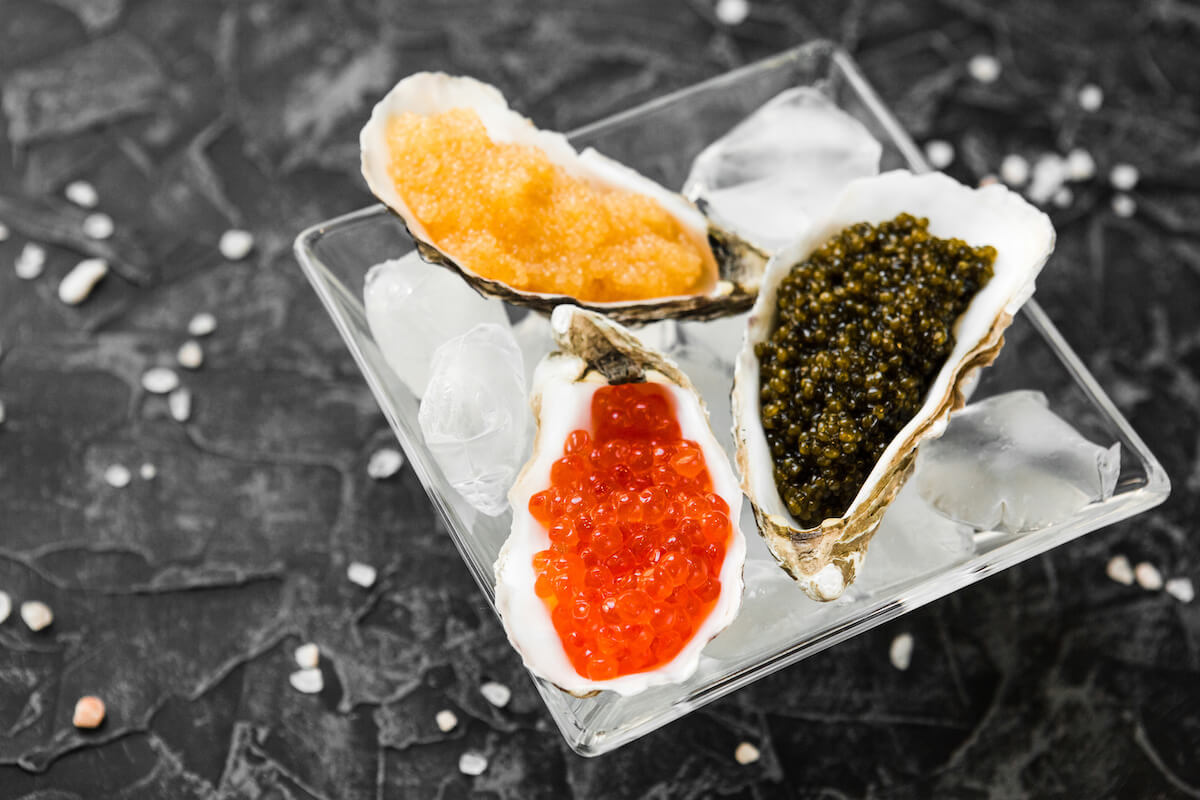
Whether you want to enjoy the luxurious black caviar or prefer to opt for a less costly red variety, it is important to know how to serve caviar. Read on to learn what garnishes and drinks to offer to your party.
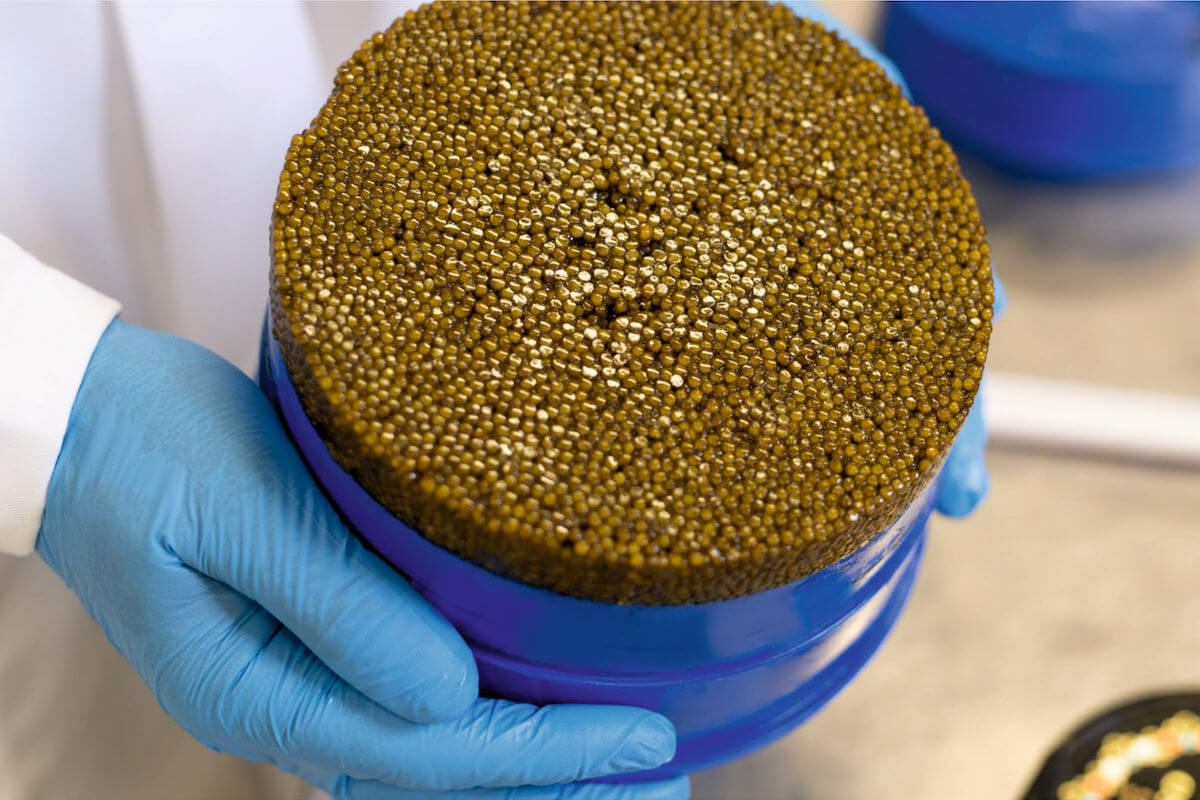
There are many different technologies for extracting caviar, depending on a variety of factors. And since a thorough discussion of this topic falls outside the scope of our article, we will only describe the most common method...
Indulge in the exquisite flavors of Ossetra caviar. With its medium-sized eggs, this delicacy offers a buttery taste and a subtle hint of nuttiness. Elevate your dining experience with this luxurious treat, perfect for special occasions.
While the original Persian word khavyar simply means "egg," not every egg can be described as caviar. Some producers tend to apply this prestigious label to any type of roe from capelin to salmon and everything in between.
Whether you want to enjoy the luxurious black caviar or prefer to opt for a less costly red variety, it is important to know how to serve caviar. Read on to learn what garnishes and drinks to offer to your party.
There are many different technologies for extracting caviar, depending on a variety of factors. And since a thorough discussion of this topic falls outside the scope of our article, we will only describe the most common method...
 Русский