Language
 English
English
English
Caviar, often associated with luxury and sophistication, is a unique culinary delight. This comprehensive guide is designed to show you how to eat caviar, enhancing your appreciation for this exquisite delicacy.
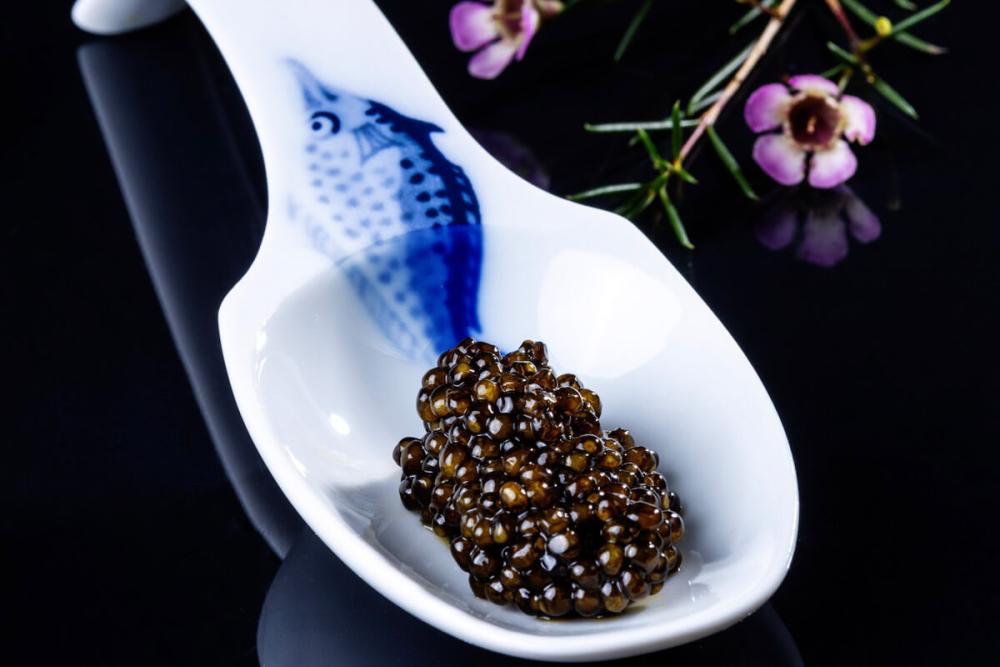 Caviar is traditionally defined as the salt-cured roe of sturgeon. Roe from salmon and other fish can be enjoyed in similar ways, but it is not technically classified as caviar and is referred to separately as “salmon roe” or “red caviar.”
The tradition of eating caviar dates back centuries and has been associated with royalty and affluence. Historically, caviar was a prized delicacy reserved for the upper echelons of society, known for its rarity and exquisite taste.
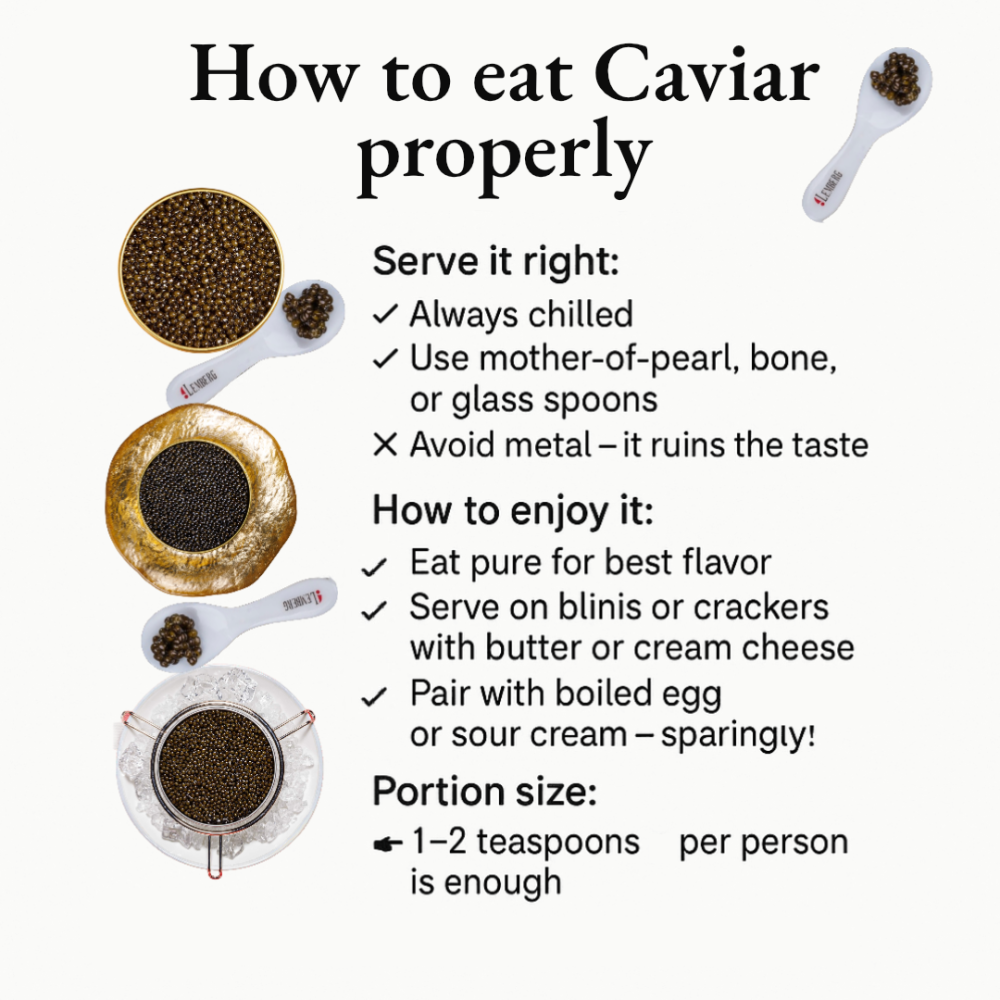
The most traditional way to enjoy caviar is to serve it well-chilled, which preserves its aroma and delicate texture. Ideally, caviar should be kept at 0–4°C until the moment of tasting. This method is best suited for high-quality caviar, where the taste and texture can be fully appreciated.
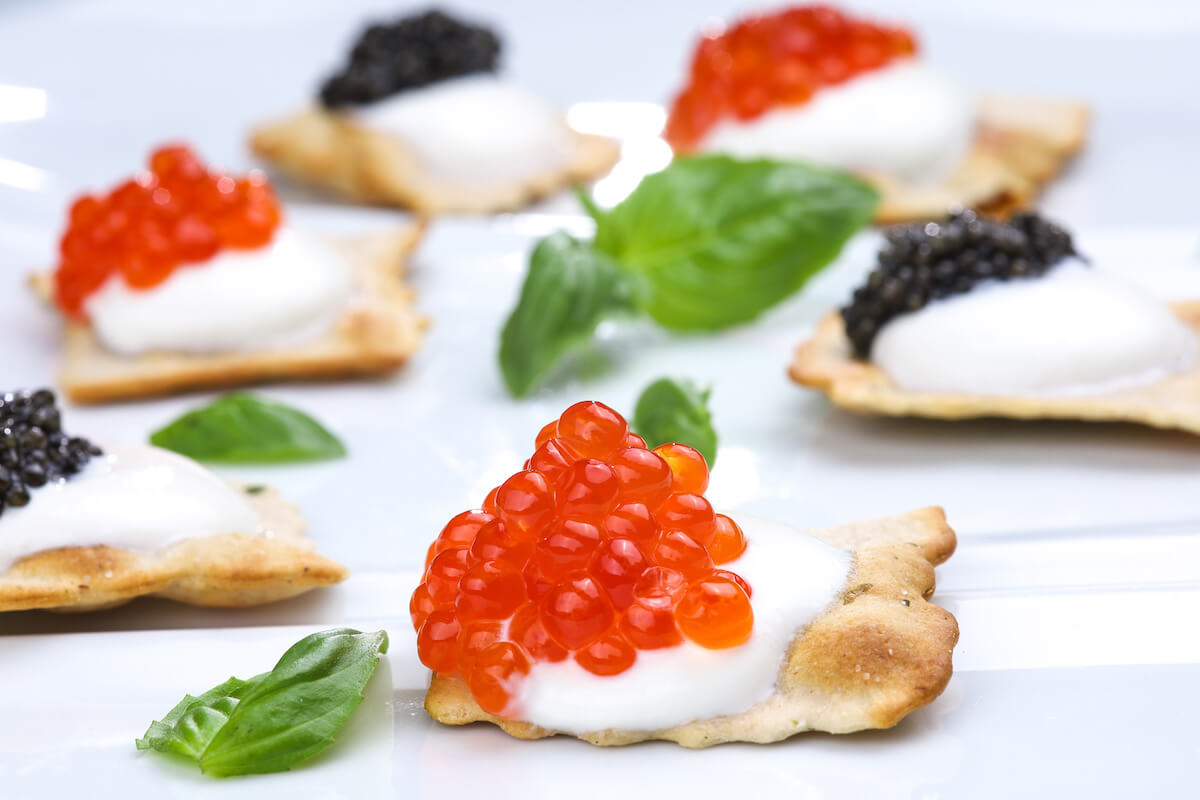
A popular way to eat caviar is on small pancakes called blinis or on crackers. These provide a neutral base that complements the caviar's flavor. A thin layer of unsalted butter or crème fraîche creates a smooth, neutral base that highlights the caviar’s flavor without overpowering it.
In addition to pancakes and crackers, caviar pairs well with finely chopped onions, boiled eggs, and sour cream. These garnishes should be added in very small amounts — the goal is to frame the caviar, not dominate it.
Chefs around the world incorporate caviar into contemporary dishes — from sushi to tartare and pasta. When adding caviar to warm foods, it should always be spooned on at the very end, just before serving, so the delicate eggs do not heat up or lose their structure. Caviar can add a luxurious touch to simple dishes, elevating the overall dining experience.
A classic tasting technique is to place a small amount of caviar on the back of your hand between the thumb and index finger. The gentle warmth of the skin releases the aroma, allowing you to experience the caviar’s flavor in its purest form.
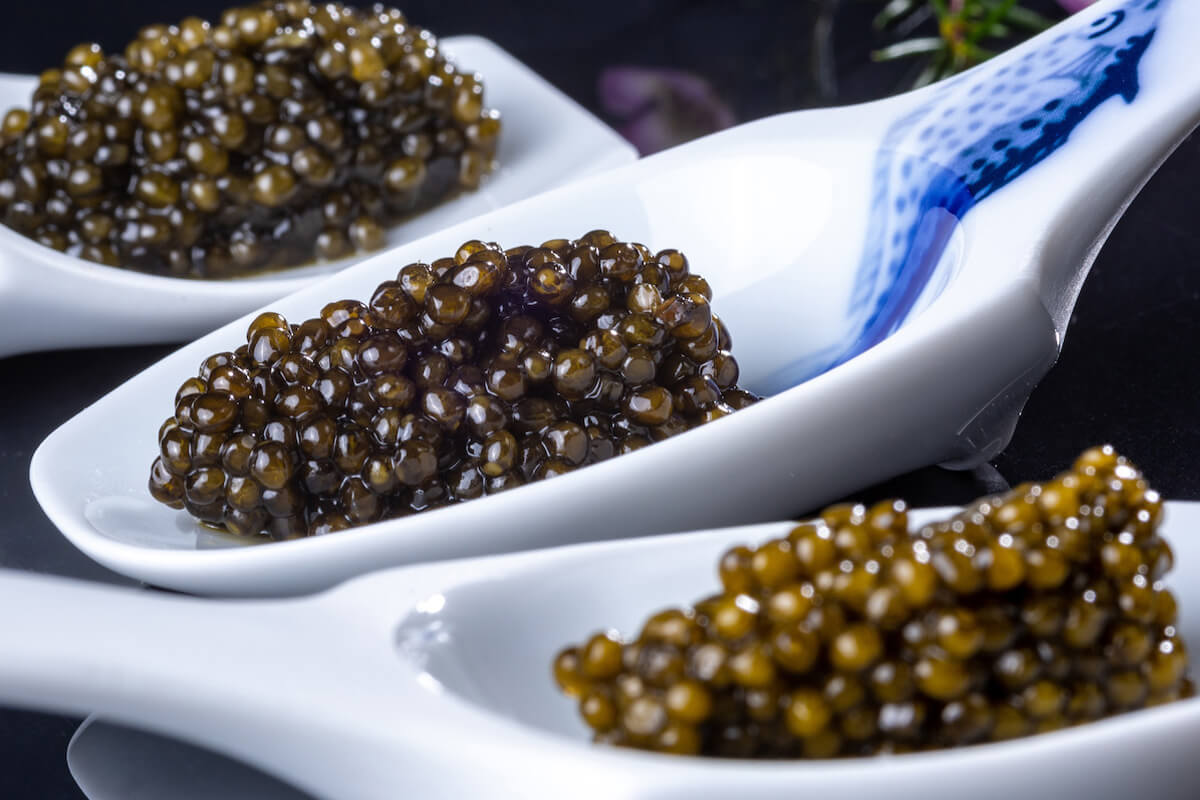
Caviar is traditionally served with small spoons made of mother-of-pearl, bone, crystal or horn. These materials do not react with the roe and preserve its pure flavor. Steel or other reactive metals can leave a slight aftertaste and are therefore best avoided. These materials do not react with caviar, ensuring that its taste remains unaltered.
Caviar is typically enjoyed in small quantities. A typical tasting portion is 5–10 grams per person, which usually equals one to two small spoonfuls. Caviar is rich and concentrated, so a modest amount is enough to appreciate its depth.
Whether enjoyed on its own, with classic accompaniments or as a finishing touch to a refined dish, caviar rewards a slow and thoughtful approach. Knowing how to serve and taste it properly allows its subtle, clean and luxurious character to unfold fully. Whether you're enjoying it on its own or as part of a sophisticated dish, understanding how to eat caviar properly can greatly enhance your enjoyment of this exquisite delicacy.
Can you eat caviar straight from the tin?
Yes, eating caviar straight from the tin is one of the best ways to enjoy its pure flavor. Use a non-metallic spoon to avoid altering the taste.
How much caviar should I serve per person?
Typically, one to two teaspoons per person is an adequate serving size. Caviar is rich and flavorful, so a small amount goes a long way.
What are the best drinks to pair with caviar?
Chilled vodka and dry champagne are classic pairings with caviar. They complement the caviar's richness and cleanse the palate between bites.
Is caviar healthy?
Caviar is rich in vitamins (A, E, B12) and minerals (iron, magnesium) and a good source of Omega-3 fatty acids. It should be consumed in moderation due to its high sodium content.
How can I tell if caviar is fresh?
Fresh caviar should have a clean, slightly salty sea aroma. The eggs should be intact, glossy, and firm. Any sour or fishy smell indicates spoilage.
Do you chew caviar?
No. Caviar is best enjoyed by letting the eggs gently roll on the palate and burst naturally, releasing their aroma without chewing.
At what temperature should caviar be served?
At 0–4°C, kept on ice until the moment of serving to preserve texture and freshness.
Last update: 30.11.2025
Our bestsellers



More Recipes & Tips
Indulge in the exquisite flavors of Ossetra caviar. With its medium-sized eggs, this delicacy offers a buttery taste and a subtle hint of nuttiness. Elevate your dining experience with this luxurious treat, perfect for special occasions.
While the original Persian word khavyar simply means "egg," not every egg can be described as caviar. Some producers tend to apply this prestigious label to any type of roe from capelin to salmon and everything in between.
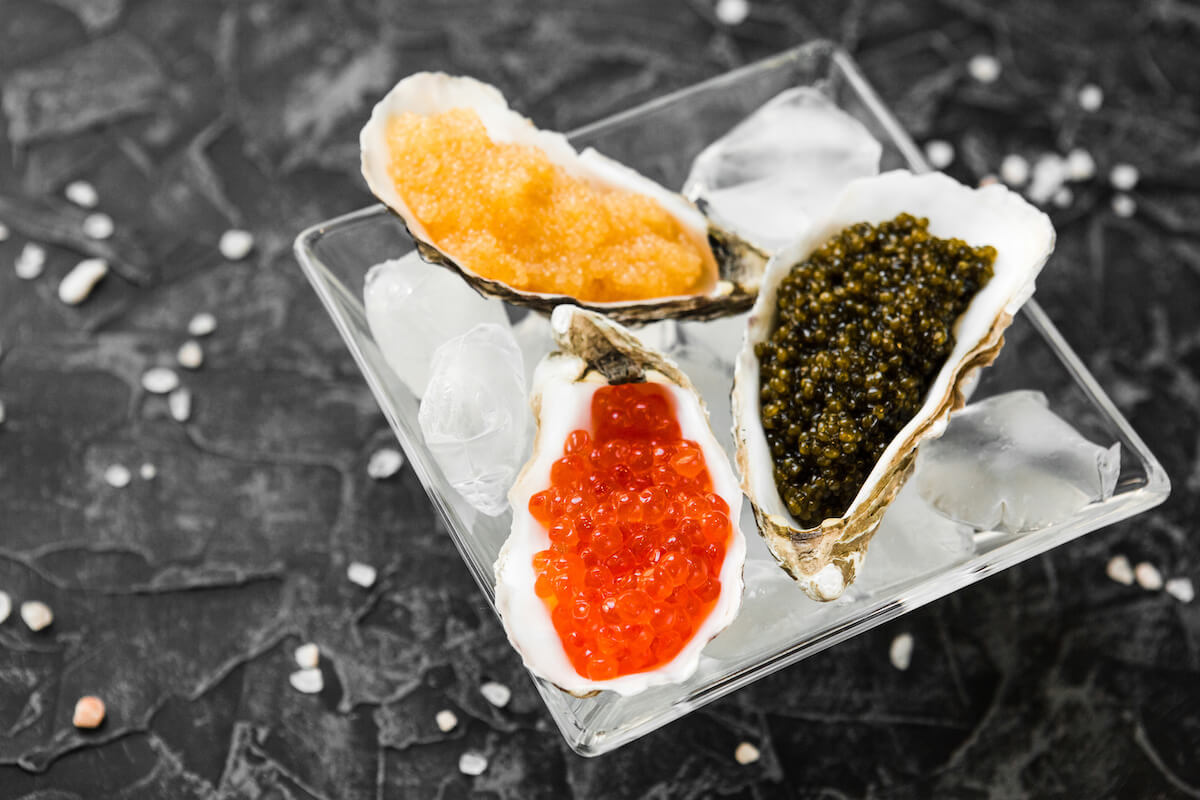
Whether you want to enjoy the luxurious black caviar or prefer to opt for a less costly red variety, it is important to know how to serve caviar. Read on to learn what garnishes and drinks to offer to your party.
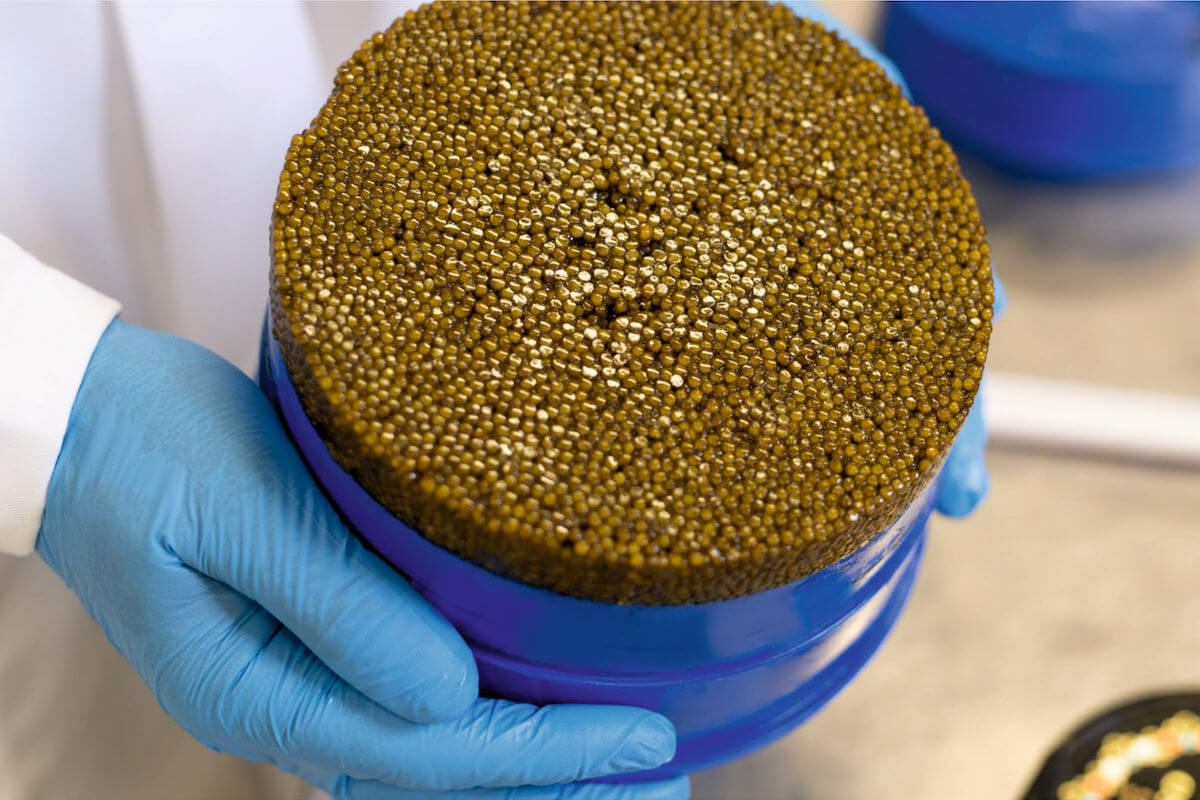
There are many different technologies for extracting caviar, depending on a variety of factors. And since a thorough discussion of this topic falls outside the scope of our article, we will only describe the most common method...
Indulge in the exquisite flavors of Ossetra caviar. With its medium-sized eggs, this delicacy offers a buttery taste and a subtle hint of nuttiness. Elevate your dining experience with this luxurious treat, perfect for special occasions.
While the original Persian word khavyar simply means "egg," not every egg can be described as caviar. Some producers tend to apply this prestigious label to any type of roe from capelin to salmon and everything in between.
Whether you want to enjoy the luxurious black caviar or prefer to opt for a less costly red variety, it is important to know how to serve caviar. Read on to learn what garnishes and drinks to offer to your party.
There are many different technologies for extracting caviar, depending on a variety of factors. And since a thorough discussion of this topic falls outside the scope of our article, we will only describe the most common method...
 Русский