Language
 English
English
English
Christmas is the perfect occasion to serve something a little more special. Caviar works particularly well in festive starters because even a small amount can transform a simple dish into an elegant addition to the Christmas table.
You do not need complicated restaurant-style cooking, either. Classic blinis with crème fraîche can be prepared in minutes, stuffed eggs work beautifully on a sharing platter, while potato pancakes or scallops are ideal when you want a more substantial first course.
Below are five Christmas starters using different types of caviar and roe, so you can choose the recipe that best suits your menu, number of guests and the amount of preparation you want to do.
| Recipe | Best for | Style |
| Blinis with caviar and crème fraîche | Drinks and Christmas parties | Easy, elegant canapé |
| Stuffed eggs with salmon roe | Cold sharing platters | Easy and colourful |
| Crab and pike roe toasts | Canapés and festive buffets | Fresh and savoury |
| Potato pancakes with sturgeon caviar | Sit-down Christmas dinner | Warm and substantial |
| Scallops with caviar butter sauce | Special Christmas dinner | Elegant and impressive |
If you are serving a large Christmas lunch afterwards, one or two small bites per guest may be enough. For an evening dinner, a warm plated starter such as potato pancakes or scallops can work better.
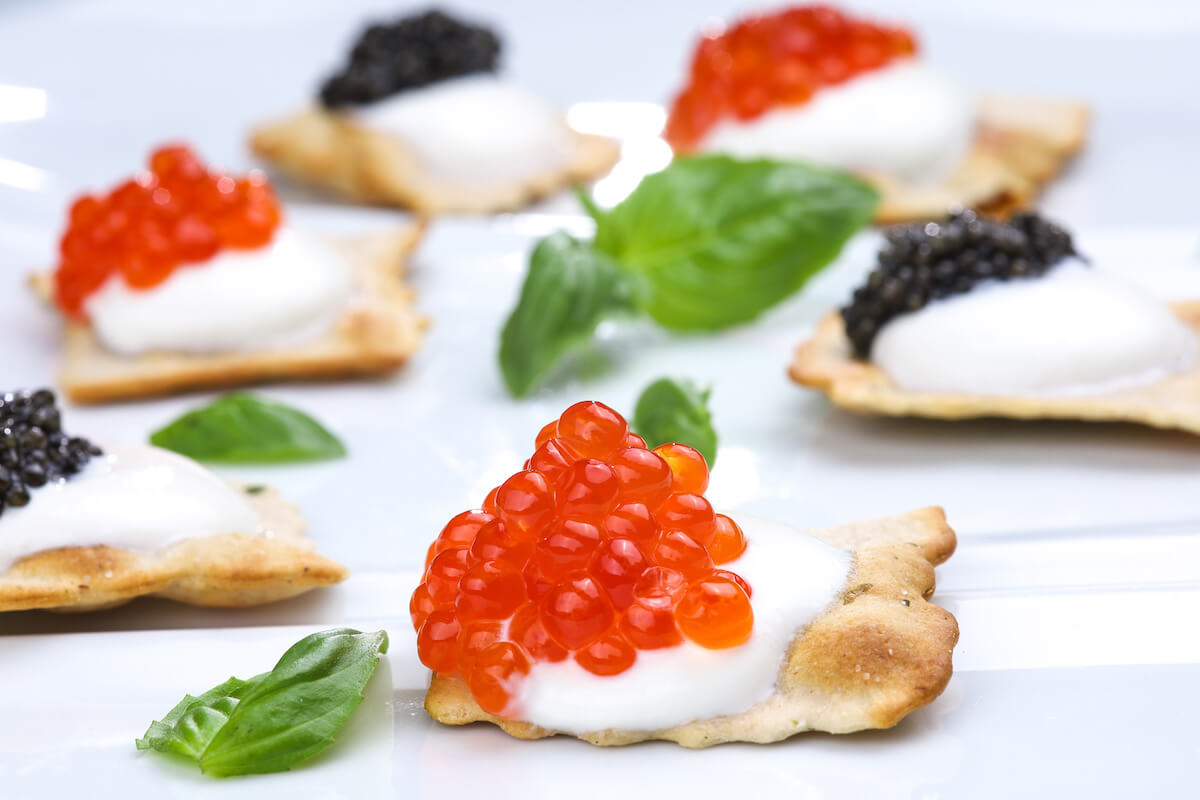
Blinis and caviar are one of the easiest ways to create an elegant Christmas canapé.
Soft buckwheat blinis provide a mild base for the distinctive flavour of caviar, while crème fraîche adds a cool, creamy contrast. Chopped chives, egg or finely diced red onion can be offered as additional garnishes.
For a simple Christmas version, top each warm blini with a small spoonful of crème fraîche, followed by caviar and a few chopped chives.
The key is not to overload them. Small, neatly topped blinis are easier to eat and allow the flavour of the caviar to remain the focus.
They are particularly suitable for serving with Champagne or sparkling wine as guests arrive.
See the full Buckwheat Blinis with Caviar recipe.
For this type of canapé, explore Lemberg’s selection of sturgeon caviar.
Stuffed eggs are a useful Christmas starter because much of the preparation can be done before guests arrive.
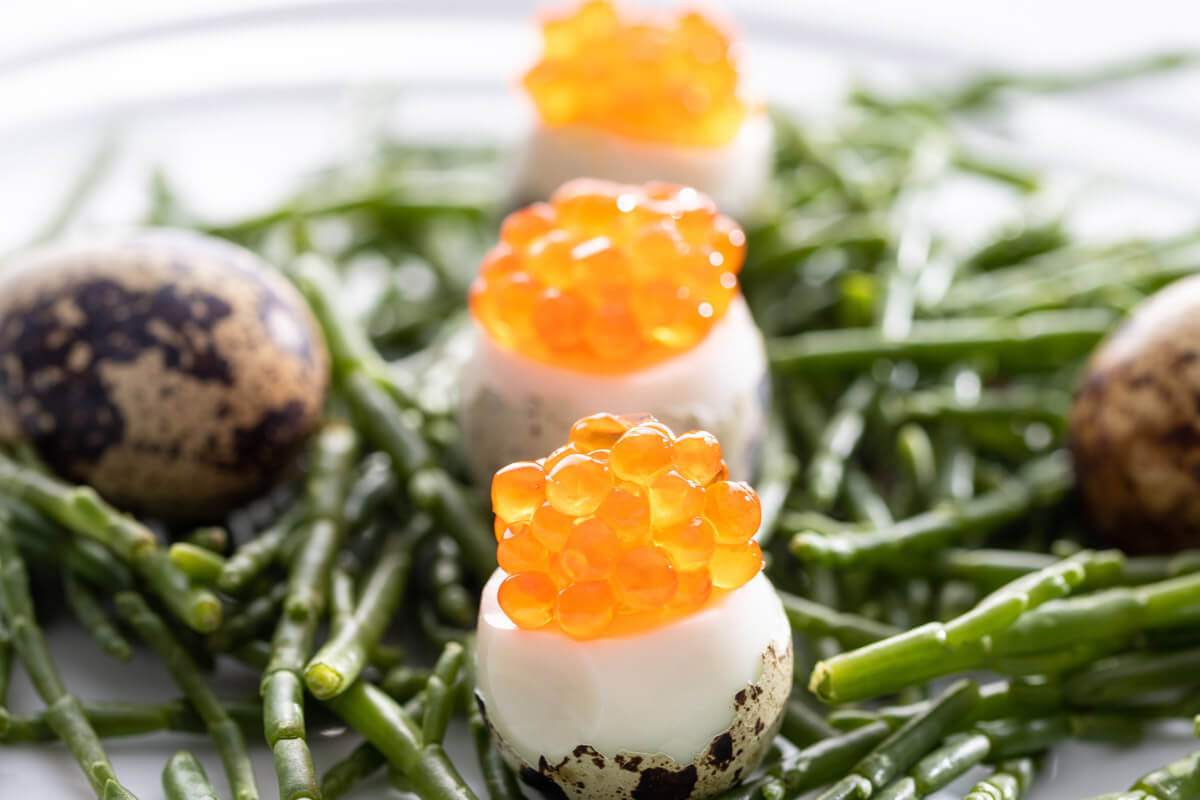
In this recipe, cooked egg yolks are combined with crab and avocado to create a creamy filling. The eggs are then finished with bright orange salmon roe, adding both colour and a distinctive burst of flavour.
Serve them on a large chilled platter, decorated with fresh herbs if you wish.
For a Christmas table with several starters, one filled egg half per person can be enough. If the eggs are one of the main items on the buffet, prepare two or more halves per guest.
The combination of white egg, green avocado and orange roe also makes this one of the most visually festive dishes in the selection.
See the full Stuffed Eggs with Salmon Roe recipe.
For something crisp and fresh, try small toasted baguette slices topped with crab and pike roe.
The filling combines crab with cucumber, quail egg, herbs and a yoghurt-based dressing, while pike roe adds a delicate salty note and extra texture.
For Christmas canapés, we recommend cutting the baguette into relatively small slices so each toast can be eaten comfortably in one or two bites.
Toast the bread in advance, but add the crab mixture shortly before serving. This helps keep the bread crisp instead of allowing it to become soft underneath the filling.
Finish each piece with a small spoonful of pike roe and a little fresh dill or another delicate herb.
See the full Crab and Pike Roe Bruschetta recipe.
This recipe is also a good option if you want to offer something different from traditional black caviar while still keeping the menu centred around fish roe.
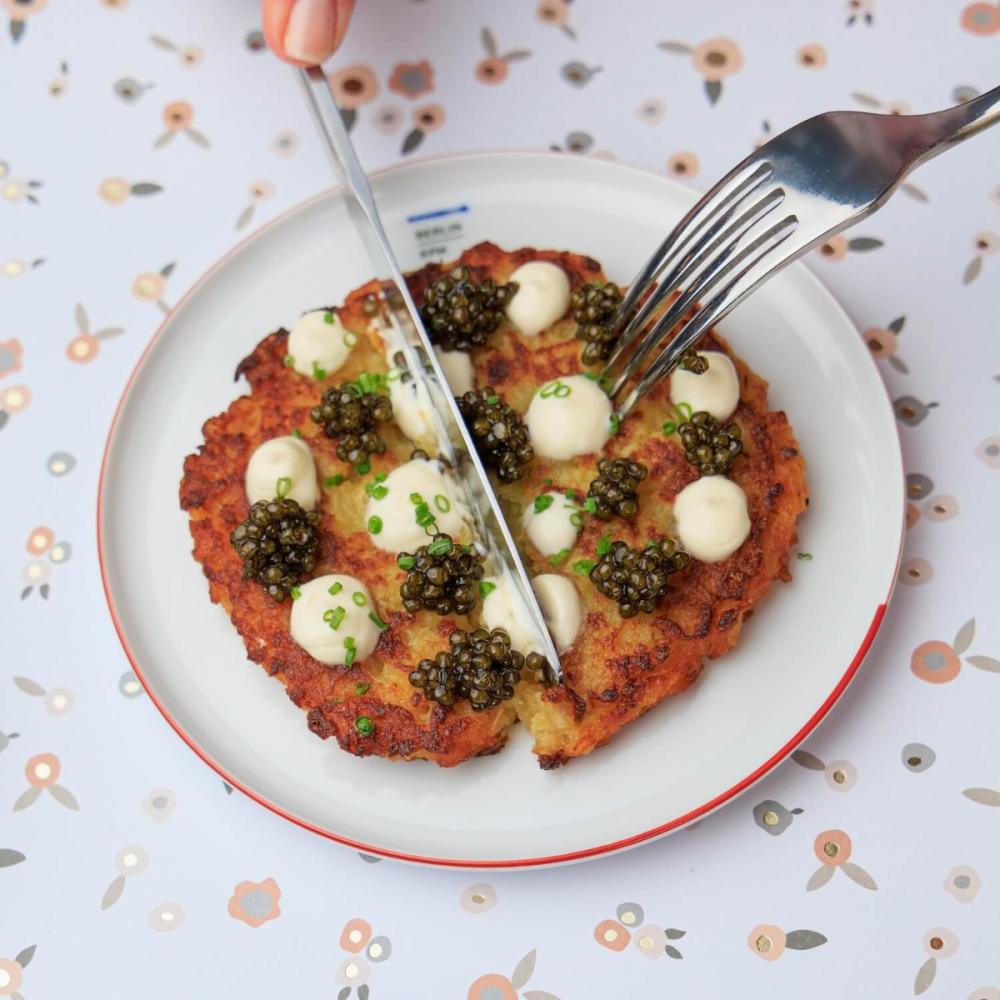
Crisp potato pancakes topped with soured cream and caviar make a richer Christmas starter and are particularly suitable for a sit-down dinner.
The contrast is what makes the dish work: hot, crisp potato underneath, cool soured cream in the middle and chilled sturgeon caviar on top.
The Lemberg recipe produces eight large potato pancakes, approximately 16–18cm in diameter, so this is better treated as a plated starter than as a canapé.
Prepare the potato mixture shortly before cooking, fry the pancakes until golden and crisp, then allow them to cool slightly before adding the toppings.
A spoonful of soured cream and caviar is enough to give the dish a festive finish without covering the texture of the pancake.
See the full Potato Pancakes with Caviar recipe.
The original recipe uses approximately 100g of caviar for eight servings, which works out at around 12.5g per person.
If you want an impressive Christmas starter for a smaller dinner, scallops with caviar are an excellent choice.
In this recipe, seared scallops are served on small potato cakes and accompanied by a rich butter sauce made with Champagne, crème fraîche and caviar.
It requires a little more preparation than the other recipes on this list, but the result feels much closer to a restaurant-style first course.
The full recipe makes twenty scallop-topped potato cakes. For a plated starter, two or three pieces per guest should usually create an elegant portion without making the dish too heavy before the main course.
Cook the scallops shortly before serving and assemble the plates immediately. Add the caviar to the sauce away from direct heat so that it remains a distinct part of the finished dish.
See the full Scallops with Caviar recipe.
This is the dish to choose when you want caviar to be part of the main flavour of the starter rather than simply a garnish.
The amount depends on whether caviar is being used as a small garnish or as one of the main ingredients.
For small blinis or toast canapés, around 3–5g per piece is a useful starting point when planning your shopping.
For example:
| Number of guests | 2 canapés per person | Approximate caviar required* |
| 6 | 12 | 36–60g |
| 8 | 16 | 48–80g |
| 10 | 20 | 60–100g |
| 12 | 24 | 72–120g |
*The exact quantity depends on the size of each canapé and how generously you want to serve the caviar.
If caviar is mixed into a sauce or filling, follow the quantities in the individual recipe rather than calculating it only as a topping.
For a table featuring several different caviar dishes, decide on the menu first and then add together the quantities required for each recipe.
Christmas cooking is much easier when the final assembly is kept simple.
You can prepare several components earlier in the day:
Leave the most delicate parts until shortly before serving.
Add caviar to blinis and toast at the last minute, fry warm starters close to serving time and cook scallops immediately before they go to the table.
Keep caviar refrigerated according to the storage instructions on the packaging and take it out only when you are ready to assemble or serve the dish.
There is no single type of caviar that works for every recipe.
Sturgeon caviar is an excellent choice for blinis, potato pancakes and elegant plated dishes where its flavour can remain prominent.
Salmon roe has a larger grain and bright orange colour, making it particularly attractive on eggs, small toasts and festive sharing platters.
Pike roe works well with seafood-based canapés, especially crab, cucumber and lighter creamy fillings.
Using more than one type of roe across your Christmas menu can also make the table more interesting without repeating exactly the same flavour in every dish.
If you do not want to prepare all five recipes, these combinations work particularly well.
For a Christmas drinks party, serve blinis with sturgeon caviar alongside crab and pike roe toasts.
For a family Christmas lunch, begin with stuffed eggs or a small portion of potato pancake with caviar.
For a special Christmas dinner, serve scallops with caviar butter sauce as a plated first course.
Whichever option you choose, keep the rest of the starter relatively simple. Good bread, crème fraîche, potatoes, eggs and seafood all provide gentle flavours that allow the caviar to remain the highlight.
A festive caviar starter does not have to be complicated.
Sometimes the simplest combinations — a warm blini, cool crème fraîche and a spoonful of caviar — are the most effective. For a larger celebration, you can combine two or three different starters and offer both black caviar and colourful fish roe.
Choose your menu according to how many guests you are serving and how much cooking you want to do on Christmas Day, then select the caviar quantities to match.
Explore the Lemberg caviar selection and create a Christmas starter that feels special without making the rest of your festive cooking more difficult.
Our bestsellers

More Recipes & Tips
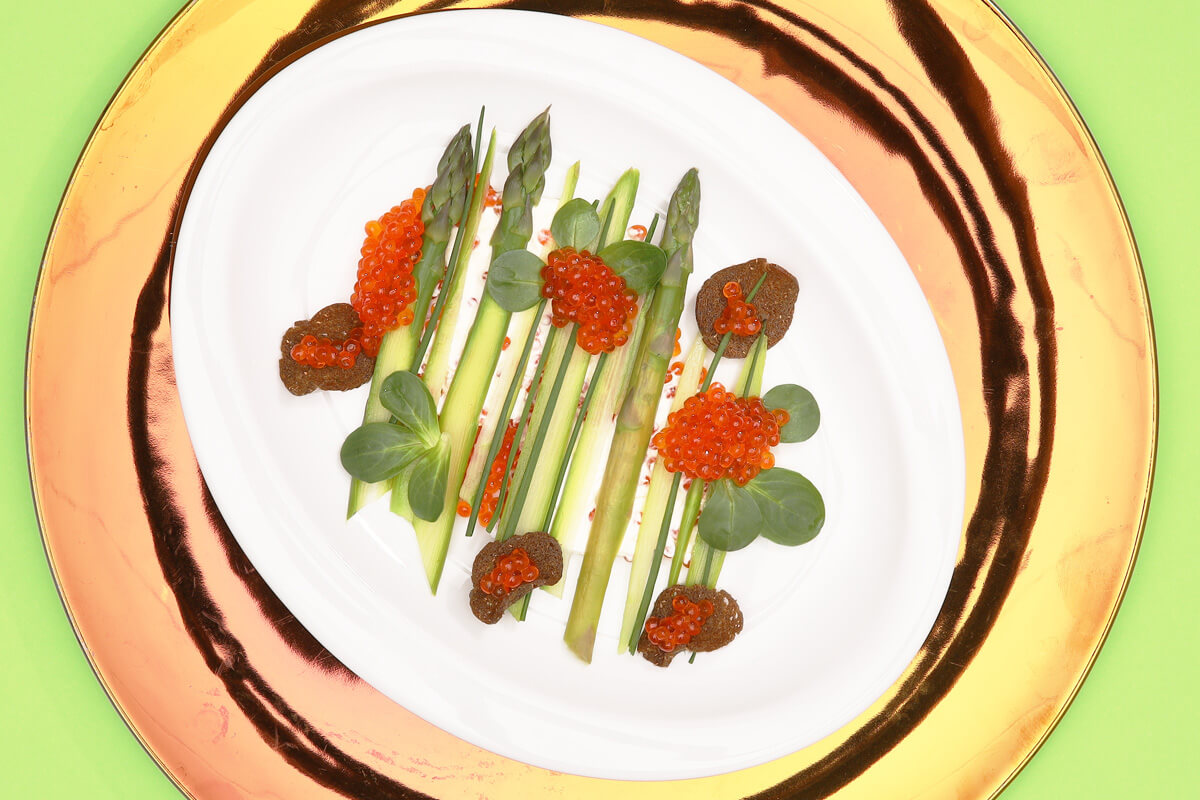
Enjoy tender asparagus steamed to perfection, topped with generous Lemberg salmon caviar, creating a refined and flavorful dish that is best savored warm. Bon appétit!
Pasta with Caviar is a luxurious dish that combines al dente pasta with a creamy caviar sauce, creating a warm and delicate flavor profile that is perfect for special occasions or romantic dinners.
Enjoy Turkey Fillet with Salmon Caviar Dressing - seared and sliced turkey fillet topped with a flavorful mixture of diced eggs, salmon, arugula, and delicate salmon caviar. Bon appétit!
Enjoy Turkey Fillet with Salmon Caviar Dressing - seared and sliced turkey fillet topped with a flavorful mixture of diced eggs, salmon, arugula, and delicate salmon caviar.
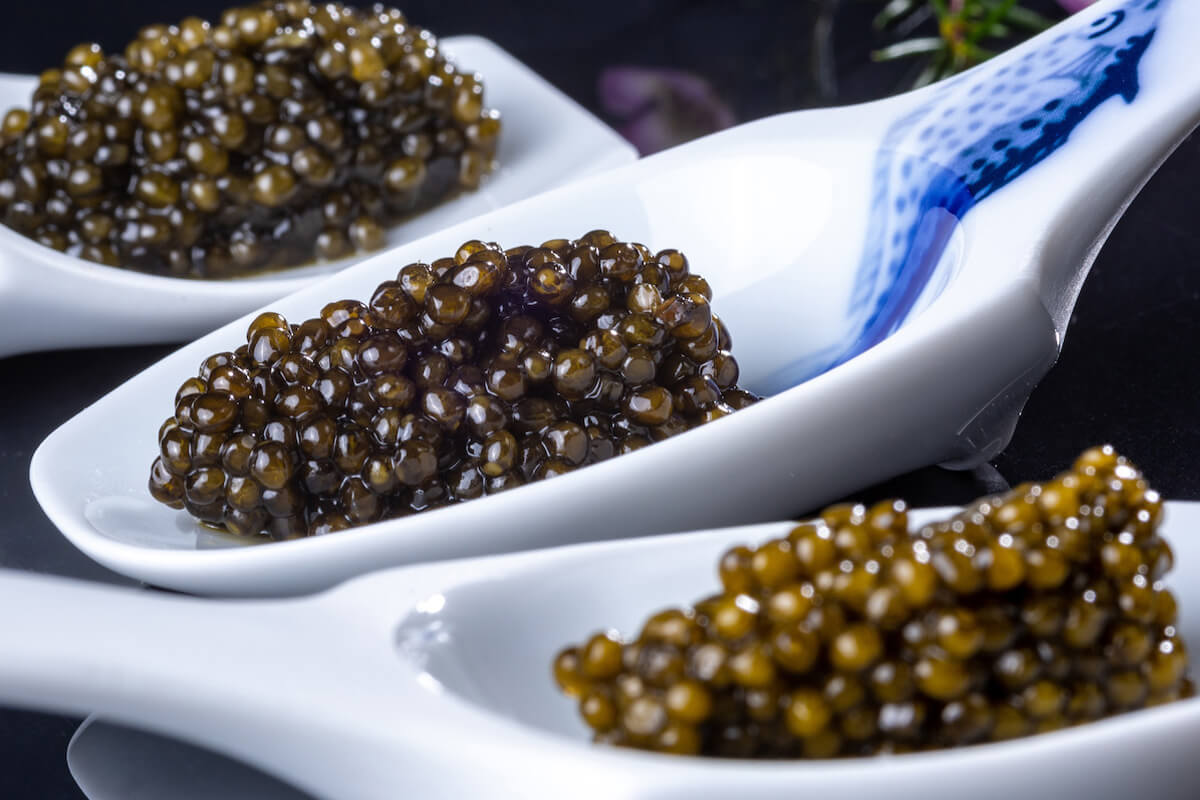
Indulge in the exquisite flavors of Ossetra caviar. With its medium-sized eggs, this delicacy offers a buttery taste and a subtle hint of nuttiness. Elevate your dining experience with this luxurious treat, perfect for special occasions.
While the original Persian word khavyar simply means "egg," not every egg can be described as caviar. Some producers tend to apply this prestigious label to any type of roe from capelin to salmon and everything in between.
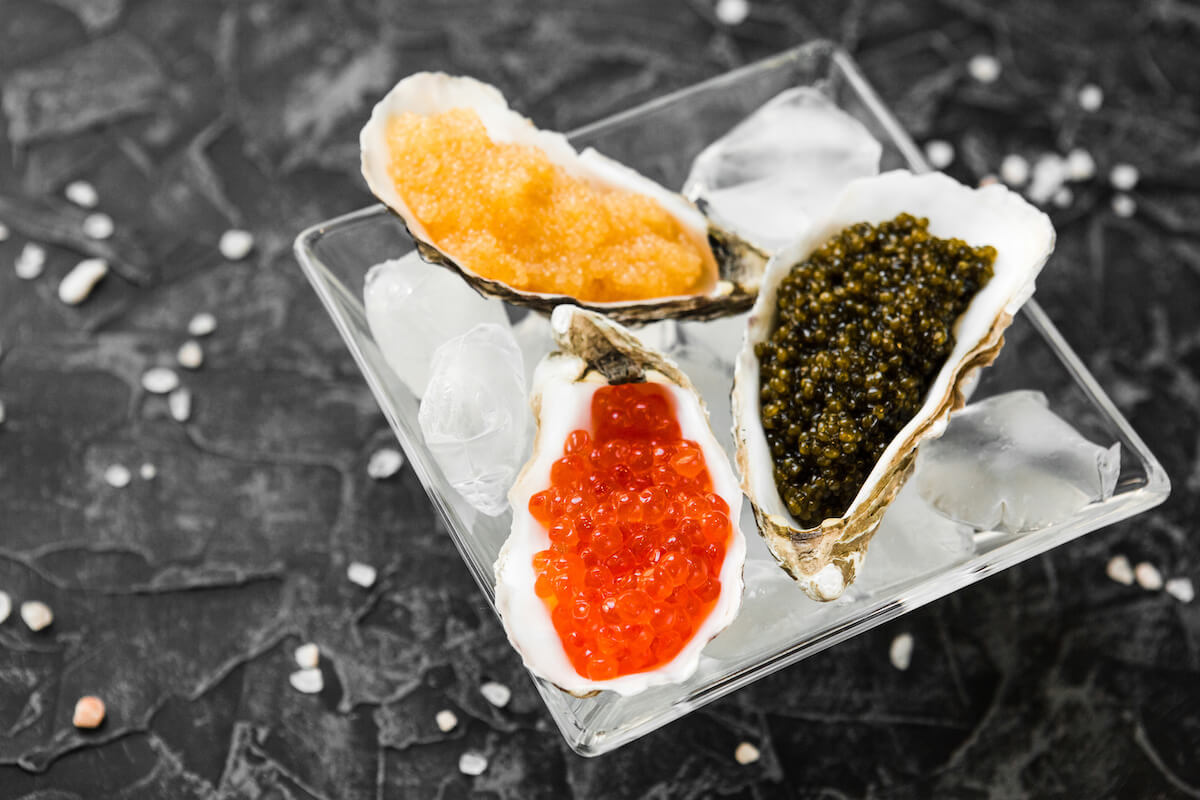
Whether you want to enjoy the luxurious black caviar or prefer to opt for a less costly red variety, it is important to know how to serve caviar. Read on to learn what garnishes and drinks to offer to your party.
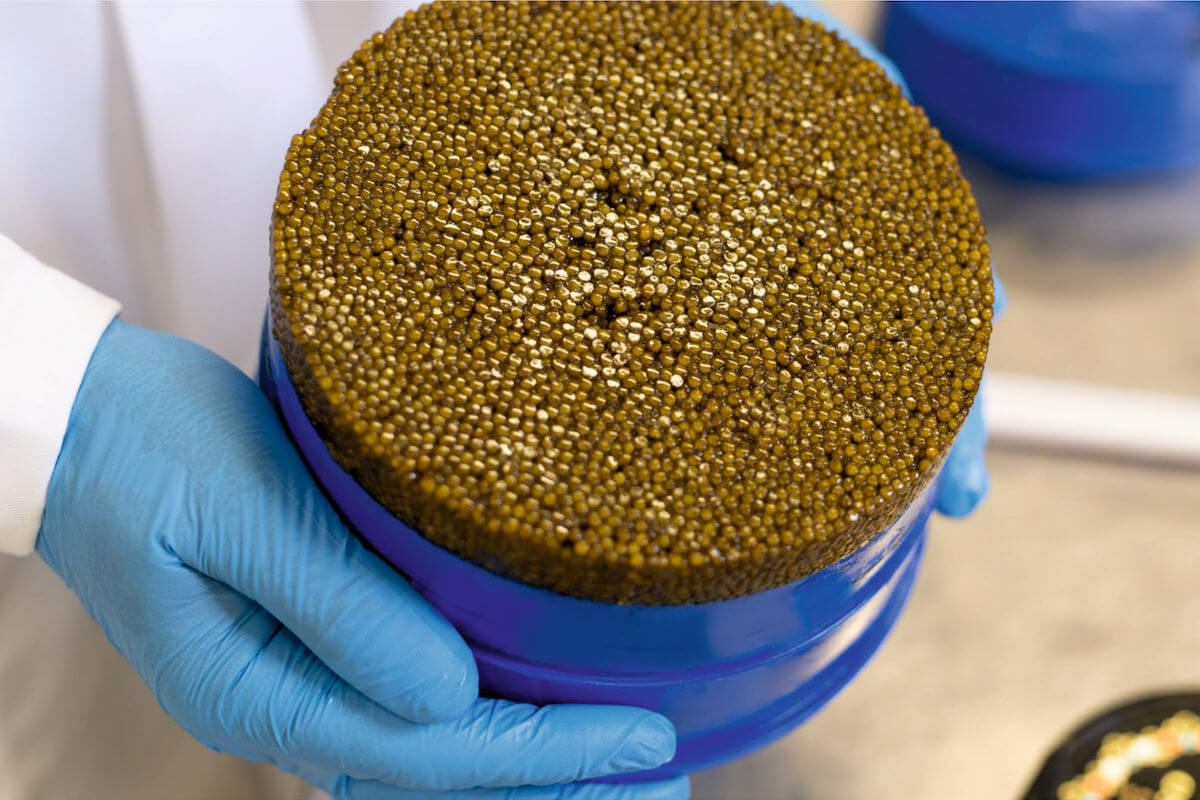
There are many different technologies for extracting caviar, depending on a variety of factors. And since a thorough discussion of this topic falls outside the scope of our article, we will only describe the most common method...
 Русский